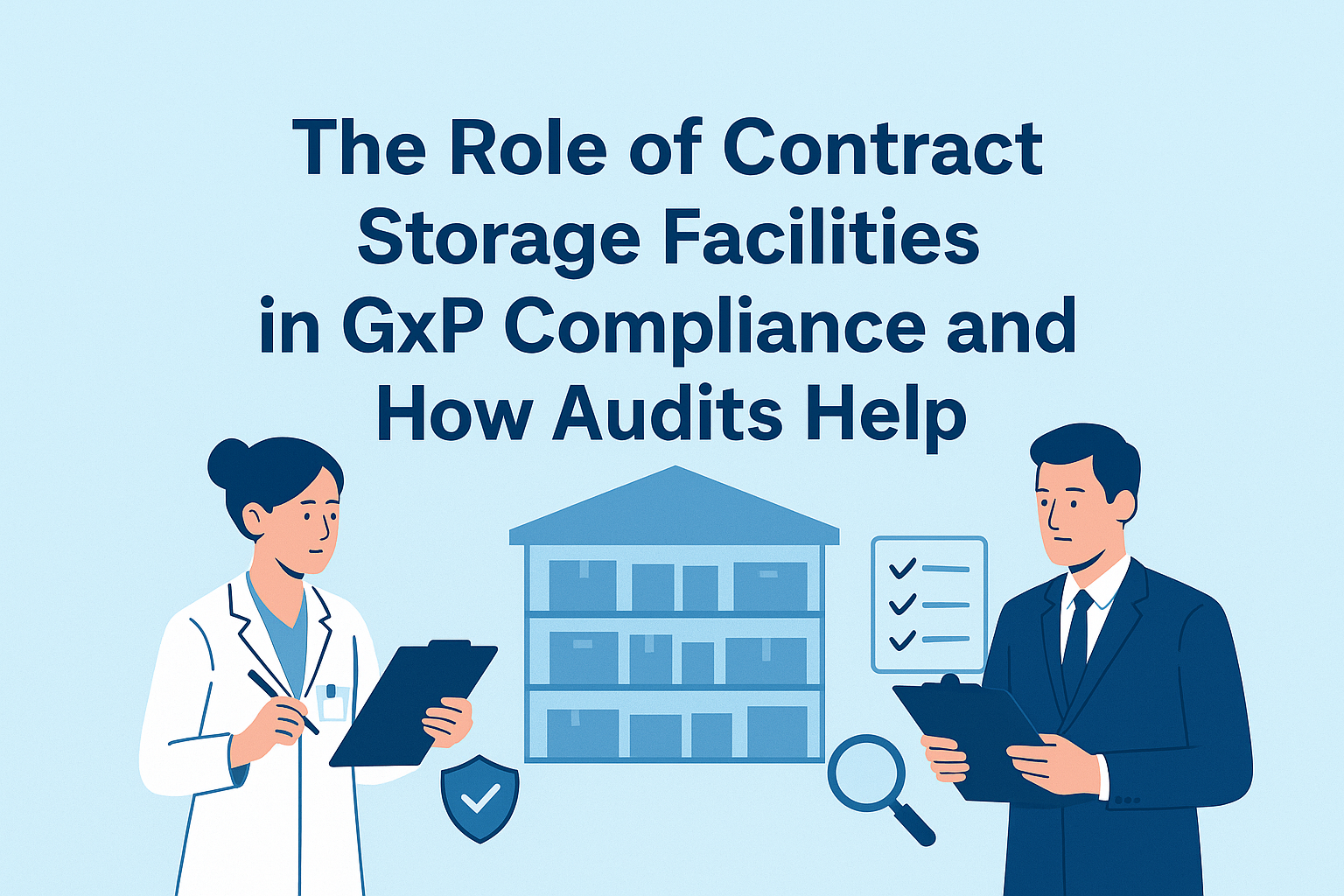
Pharmaceutical companies rely on an extended supply chain to ensure medicines are stored, handled, and delivered safely. One critical component in this chain is the contract storage facility, which provides warehousing and distribution services for medicinal products. While outsourcing storage can improve efficiency and flexibility, it also introduces regulatory and quality risks.
To meet Good Practice (GxP) standards pharmaceutical companies must ensure that their storage partners operate to the highest compliance standards. This is where vendor audits of contract storage facilities play a vital role.
Why Contract Storage Facilities Are Critical to GxP Compliance
- Maintaining Product Quality
Medicines are highly sensitive to temperature, humidity, and handling conditions. A small deviation in storage or transport can compromise product quality, leading to ineffective or unsafe medicines reaching patients. - Regulatory Expectations
Agencies such as the MHRA, EMA, and FDA require that storage facilities follow GxP guidelines. Even when storage is outsourced, the marketing authorisation holder remains responsible for compliance. This makes auditing third-party storage facilities a regulatory necessity. - Traceability and Documentation
Storage partners must maintain accurate records of product movement, temperature monitoring, and security controls. Audits help verify whether documentation practices meet data integrity and regulatory standards. - Risk Management
Risks such as cross-contamination, theft, temperature excursions, and improper handling are inherent in storage and distribution. Auditing ensures that these risks are identified, controlled, and mitigated effectively.
What Audits of Contract Storage Facilities Cover
When auditing storage facilities, pharmaceutical companies typically evaluate:
- Temperature and Environmental Controls – calibration of equipment, cold chain management, and monitoring systems.
- Security and Access Control – preventing theft, tampering, or unauthorised access.
- Storage Layout and Segregation – ensuring quarantined, returned, or expired products are kept separate.
- Quality Systems – including SOPs, CAPA (Corrective and Preventive Actions), and training records.
- Documentation and Data Integrity – reviewing batch records, audit trails, and traceability systems.
- Transportation and Distribution Controls – compliance during product movement from the facility to final destinations.
How Audits Strengthen Compliance
Auditing contract storage facilities provides:
- Assurance of Compliance – confirming adherence to GxP requirements.
- Regulator-Ready Documentation – evidence of due diligence in supplier qualification.
- Early Risk Detection – preventing issues before they result in product recalls or regulatory action.
- Continuous Improvement – driving vendors to improve systems, technology, and practices.
Q&V’s Expertise in Storage Facility Audits
At Q&V, we conduct independent vendor audits of contract storage facilities to ensure your partners are fully aligned with GxP compliance requirements. Our audits are risk-based, comprehensive, and tailored to your supply chain needs.
Our services cover:
- Qualification audits of new storage partners.
- Periodic audits to verify ongoing compliance.
- Assessment of corrective actions and improvements.
- Support in preparing regulator-ready documentation.
With Q&V, you gain confidence that your storage and distribution partners uphold the same quality standards that regulators demand from your organisation.