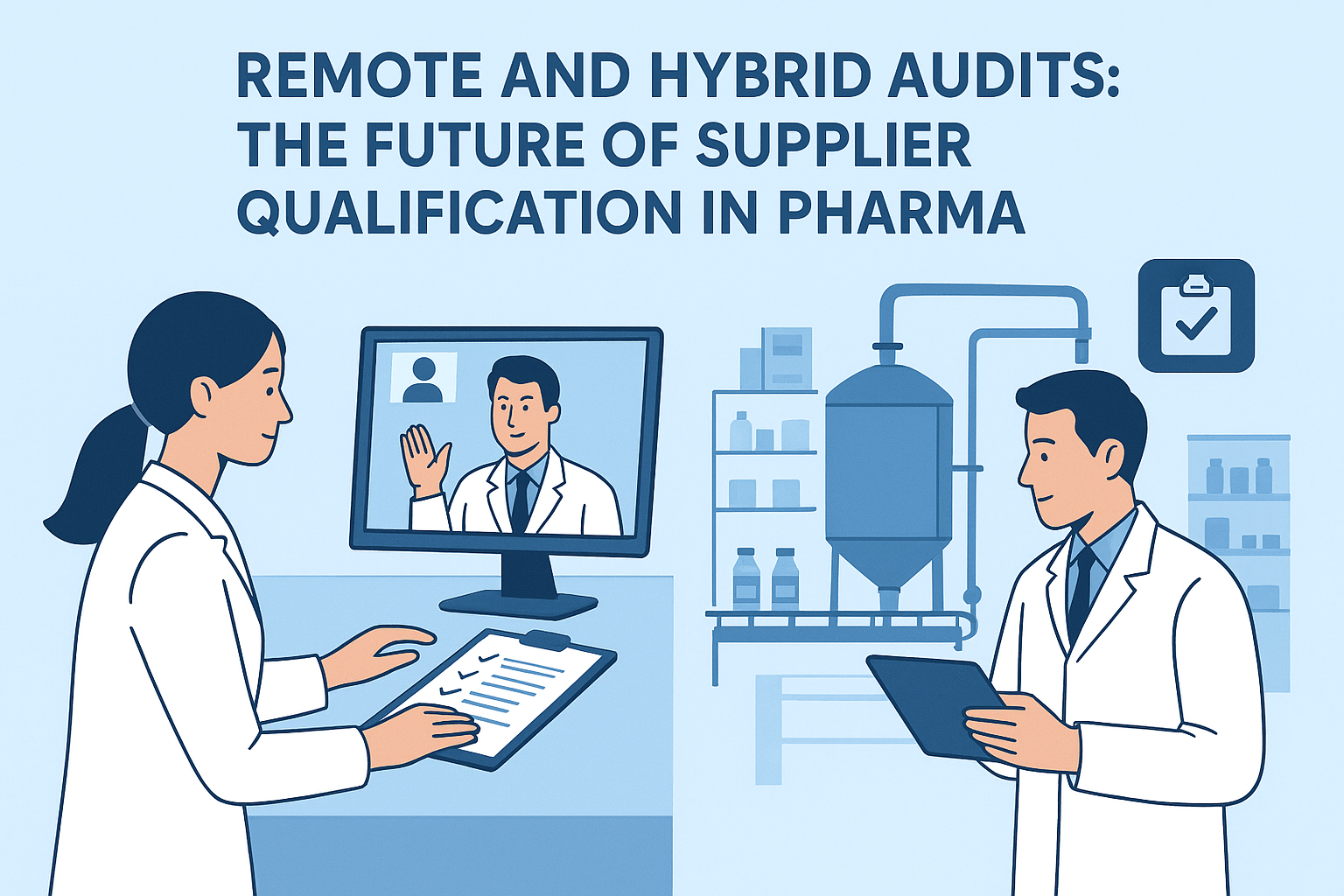
The pharmaceutical industry has always relied on supplier audits as a core element of quality assurance and regulatory compliance. Traditionally, these audits were conducted on-site, with auditors physically visiting manufacturing plants, storage facilities, or service providers. However, the global pandemic accelerated the adoption of remote and hybrid audits, transforming how supplier qualification is carried out.
Remote and hybrid audit models are not temporary alternatives—they are fast becoming the future of supplier audits in pharma, offering flexibility, efficiency, and expanded global reach while maintaining compliance with GMP, and GDP requirements.
The Shift from On-Site to Remote Audits
When travel restrictions disrupted supply chains and compliance monitoring, the industry turned to remote audits—leveraging digital platforms, video conferencing, and secure data-sharing tools to assess suppliers. Regulators, including the MHRA, EMA, and FDA, provided guidance to support this transition, recognising that compliance must continue regardless of physical limitations.
This approach has now evolved into a hybrid model, where critical parts of the audit are conducted on-site, while documentation review, interviews, and follow-up checks are carried out remotely.
Benefits of Remote and Hybrid Audits
- Global Reach and Accessibility
Remote audits make it easier to assess suppliers located across multiple geographies without the logistical challenges of travel. - Cost and Time Efficiency
Reduced travel means significant savings in both time and resources, allowing companies to schedule more audits within the same period. - Flexibility and Agility
Hybrid audits allow companies to tailor the audit model to supplier risk levels—remote for low-risk activities, on-site for high-risk or critical operations. - Continuity of Compliance
Even in situations where travel is not possible, remote audits ensure uninterrupted supplier qualification, keeping the pharmaceutical supply chain compliant. - Digital Integration
The use of eQMS platforms, secure data rooms, and real-time monitoring tools makes the audit process more transparent and traceable.
Challenges of Remote and Hybrid Audits
While the benefits are significant, remote and hybrid audits also come with challenges that must be managed carefully:
- Data Security and Confidentiality – ensuring sensitive supplier information is exchanged securely.
- Technology Dependence – reliable connectivity and access to digital tools are crucial.
- Limited Physical Verification – some processes, such as equipment inspection, may still require on-site presence.
How Audits Support Supplier Qualification in Pharma
Supplier qualification is a critical requirement under Good Manufacturing Practice (GMP) and Good Distribution Practice (GDP) guidelines. Through remote and hybrid audits, pharmaceutical companies can:
- Verify compliance with regulatory standards.
- Assess supplier capabilities and quality systems.
- Identify risks and enforce corrective and preventive actions (CAPA).
- Maintain comprehensive, regulator-ready documentation.
Q&V’s Approach to Remote and Hybrid Audits
At Q&V, we recognise the growing importance of flexible supplier audit models. Our audit teams are experienced in conducting both remote and hybrid audits, using secure digital platforms and structured methodologies to deliver reliable, regulator-compliant results.
Whether you are qualifying a new supplier, monitoring packaging and labelling partners, or reviewing storage and distribution providers, Q&V ensures that audits are efficient, effective, and tailored to the risk level of your suppliers.
Our services include:
- Remote supplier audits using secure digital tools.
- Hybrid audits combining on-site inspection with remote documentation review.
- Detailed audit reports with actionable recommendations.
- Support in closing compliance gaps and preparing for regulatory inspections.
With Q&V’s expertise in remote and hybrid audits, pharmaceutical organisations can strengthen supplier qualification programmes and ensure robust compliance across the global supply chain.