
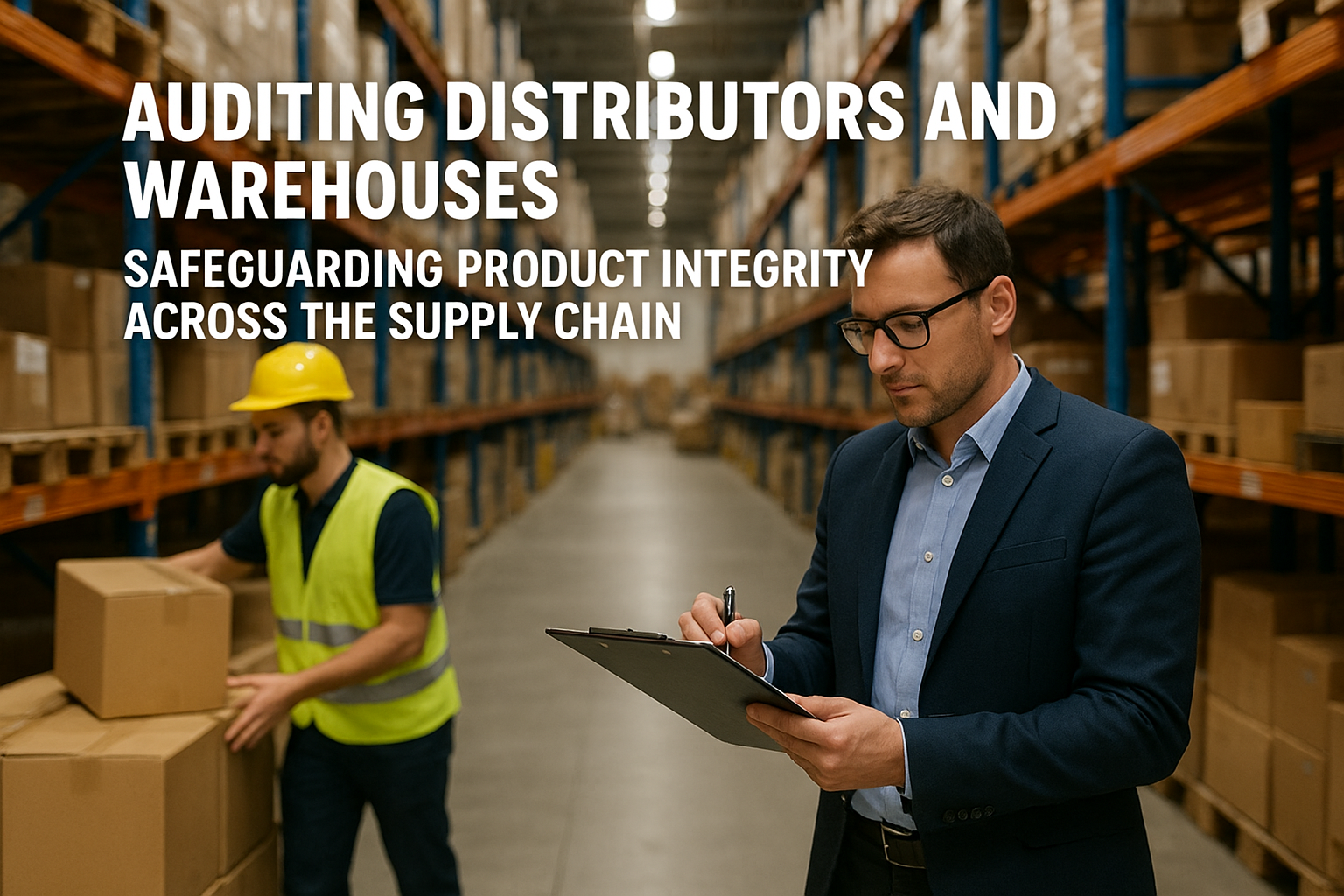
In the pharmaceutical industry, the journey of a product does not end once it leaves the manufacturing site. Distributors and warehouse facilities play a vital role in ensuring that medicines are stored, handled, and transported under the right conditions until they reach healthcare providers and patients.
However, this stage of the supply chain carries significant risk. Temperature excursions, inadequate storage conditions, or mishandling during distribution can compromise product quality, leading to regulatory non-compliance, product recalls, or—most importantly—patient safety concerns.
This is why auditing distributors and warehouses is a cornerstone of Good Distribution Practice (GDP) compliance and overall pharmaceutical supply chain integrity.
Why Warehouse and Distribution Audits Are Essential
- Regulatory Requirements
Regulators such as the MHRA, EMA, and FDA mandate that companies remain accountable for their outsourced distribution and warehousing activities. Regular audits provide documented assurance that partners operate in compliance with GDP and GMP standards. - Product Quality and Safety
Medicines are highly sensitive to environmental factors. Audits confirm whether warehouses maintain correct storage conditions, such as temperature, humidity, and segregation of different product categories. - Risk Mitigation
Distribution networks are vulnerable to risks such as theft, counterfeiting, and mishandling. Supplier audits identify vulnerabilities and ensure corrective actions are in place before they impact patients. - Data Integrity and Traceability
Pharmaceutical regulations demand full traceability of products throughout the supply chain. Audits assess whether warehouses and distributors maintain accurate records, audit trails, and secure systems to track product movement. - Supply Chain Confidence
A robust audit programme builds confidence among regulators, healthcare providers, and patients, demonstrating that the company is actively monitoring every stage of the supply chain.
Key Areas Covered in Distributor and Warehouse Audits
When auditing distributors and warehouse facilities, the following aspects are typically assessed:
- Storage Conditions – temperature monitoring, calibration of equipment, humidity control, and segregation of quarantined or expired products.
- Security Measures – access control, surveillance systems, and protection against theft or tampering.
- Documentation and Record-Keeping – batch records, distribution logs, and data integrity compliance.
- Transportation Practices – cold chain management, vehicle qualification, and handling during delivery.
- Quality Systems – standard operating procedures (SOPs), training records, and CAPA (Corrective and Preventive Actions).
- Regulatory Compliance – alignment with GDP, GMP, and other regional guidelines.
How Audits Strengthen Supply Chain Integrity
By carrying out regular audits of distributors and warehouses, pharmaceutical companies can:
- Detect compliance gaps early and implement corrective measures.
- Reduce the risk of product recalls and regulatory penalties.
- Ensure patients receive medicines that are safe, effective, and of the highest quality.
- Demonstrate regulatory due diligence and build trust with stakeholders.
Q&V’s Expertise in Distribution and Warehouse Audits
At Q&V, we provide independent, risk-based audits of distributors and warehouse facilities to strengthen your pharmaceutical supply chain. Our expert auditors evaluate compliance against GDP, and GxP standards, delivering detailed reports with actionable recommendations.
Whether you need to qualify a new warehouse partner, review an existing distributor, or conduct periodic compliance checks, Q&V ensures your supply chain partners uphold the same quality and safety standards expected of your organisation.
With Q&V’s auditing expertise, you can build a resilient and compliant distribution network that ensures medicines reach patients exactly as intended—safe, effective, and reliable.