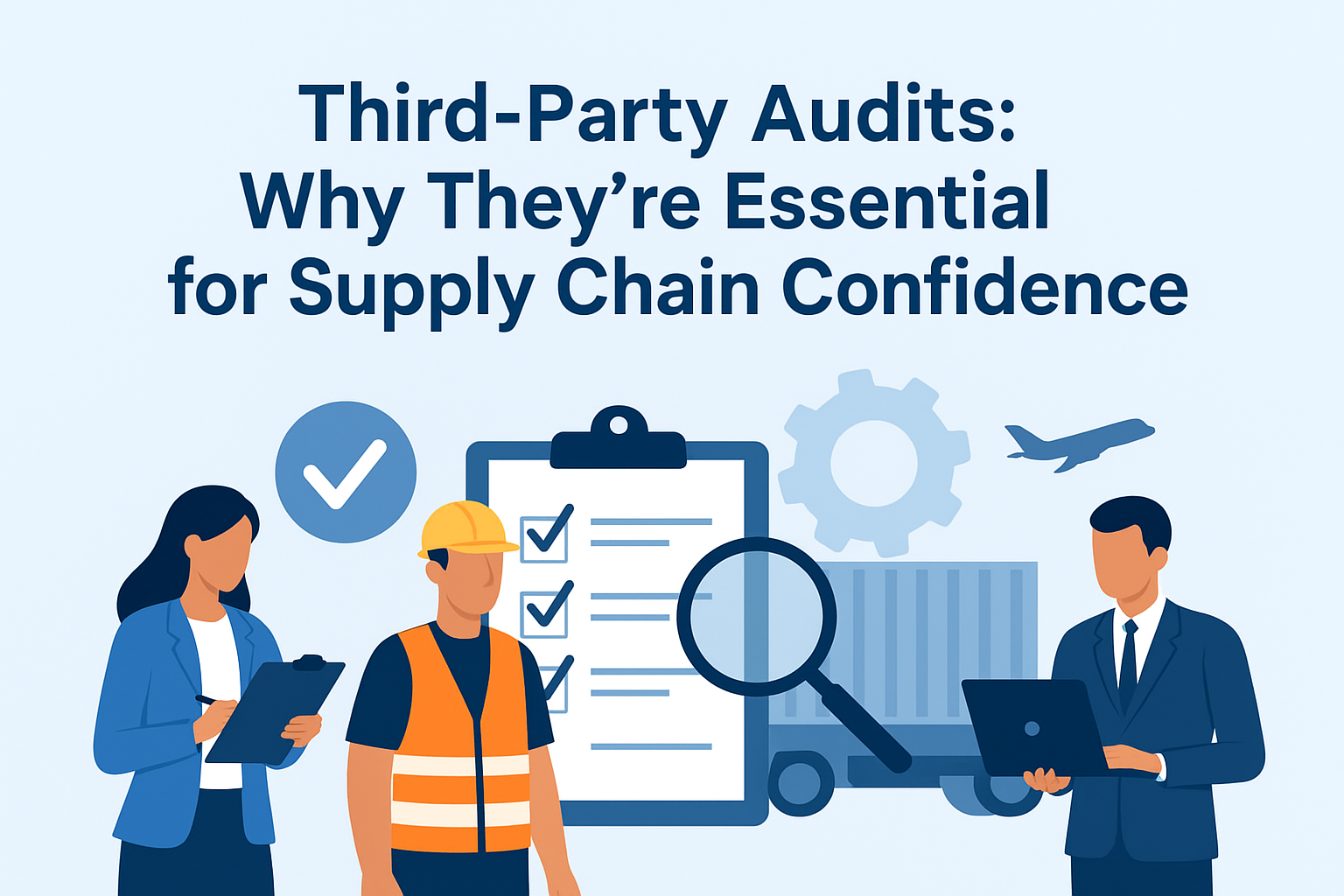
In a global pharmaceutical and life sciences industry, supply chains are complex, interconnected, and often span multiple countries. While outsourcing manufacturing, packaging, or testing can deliver cost efficiencies and access to specialised expertise, it also introduces significant compliance risks.
Regulatory agencies expect companies to take full responsibility for the quality and compliance of their outsourced activities—even if those activities are performed by a supplier, contract manufacturer, or testing laboratory. This is where third-party audits become an essential tool for safeguarding product integrity, patient safety, and business continuity.
Why Third-Party Audits Matter
- Regulatory Compliance Obligations
GMP regulations require Marketing Authorisation Holders (MAHs) and manufacturers to ensure that all suppliers and subcontractors comply with applicable standards. Regulatory bodies, such as the FDA, EMA, and MHRA, increasingly scrutinise supplier oversight during inspections. - Risk Mitigation
A single non-compliant supplier can trigger warning letters, import bans, product recalls, or supply shortages. Third-party audits help identify and address weaknesses before they escalate into regulatory findings. - Objective Evaluation
Independent audits bring impartiality. Internal teams may overlook issues due to familiarity, while third-party auditors apply fresh eyes, industry benchmarks, and regulatory insight. - Global Supply Chain Visibility
For companies managing multiple suppliers across different geographies, audits ensure that quality expectations are met consistently—regardless of local regulatory maturity.
Typical Scope of a Third-Party Audit
A well-executed third-party audit will assess:
- Quality Management Systems – Structure, documentation, and adherence to GMP or ISO requirements.
- Manufacturing and Testing Operations – Equipment qualification, process validation, and method reliability.
- Data Integrity Controls – ALCOA+ compliance for electronic and paper records.
- Personnel Training and Competency – Evidence of adequate training, qualification, and performance monitoring.
- Supplier and Subcontractor Oversight – Verification of the supplier’s own supply chain governance.
- Deviation, CAPA, and Change Control Systems – Effectiveness and documentation of issue resolution processes.
How Q&V’s Independent Audits Strengthen Supplier Qualification
At Q&V, we provide specialised third-party audit services tailored to the pharmaceutical and life sciences sectors. Our approach delivers:
- Objective, Risk-Based Assessments – Prioritising critical areas that impact product quality and patient safety.
- Global Regulatory Alignment – Using FDA, EMA, WHO, and ICH guidelines as benchmarks for compliance.
- Customised Audit Programmes – Adapting scope and depth based on supplier type, product risk, and geographic considerations.
- Actionable Reporting – Clear, prioritised findings with practical remediation guidance.
- Follow-Up Verification – Ensuring corrective actions are implemented effectively and sustainably.
- Supplier Qualification Support – Helping clients integrate audit outcomes into approval and ongoing monitoring decisions.
The Value of Continuous Monitoring
A one-off supplier audit is not enough in today’s regulatory landscape. Continuous monitoring—through periodic re-audits, desk reviews, and performance scorecards—ensures that suppliers maintain compliance over time.
Q&V partners with clients to create supplier monitoring frameworks that balance cost-effectiveness with regulatory robustness, ensuring the supply chain remains resilient and audit-ready.