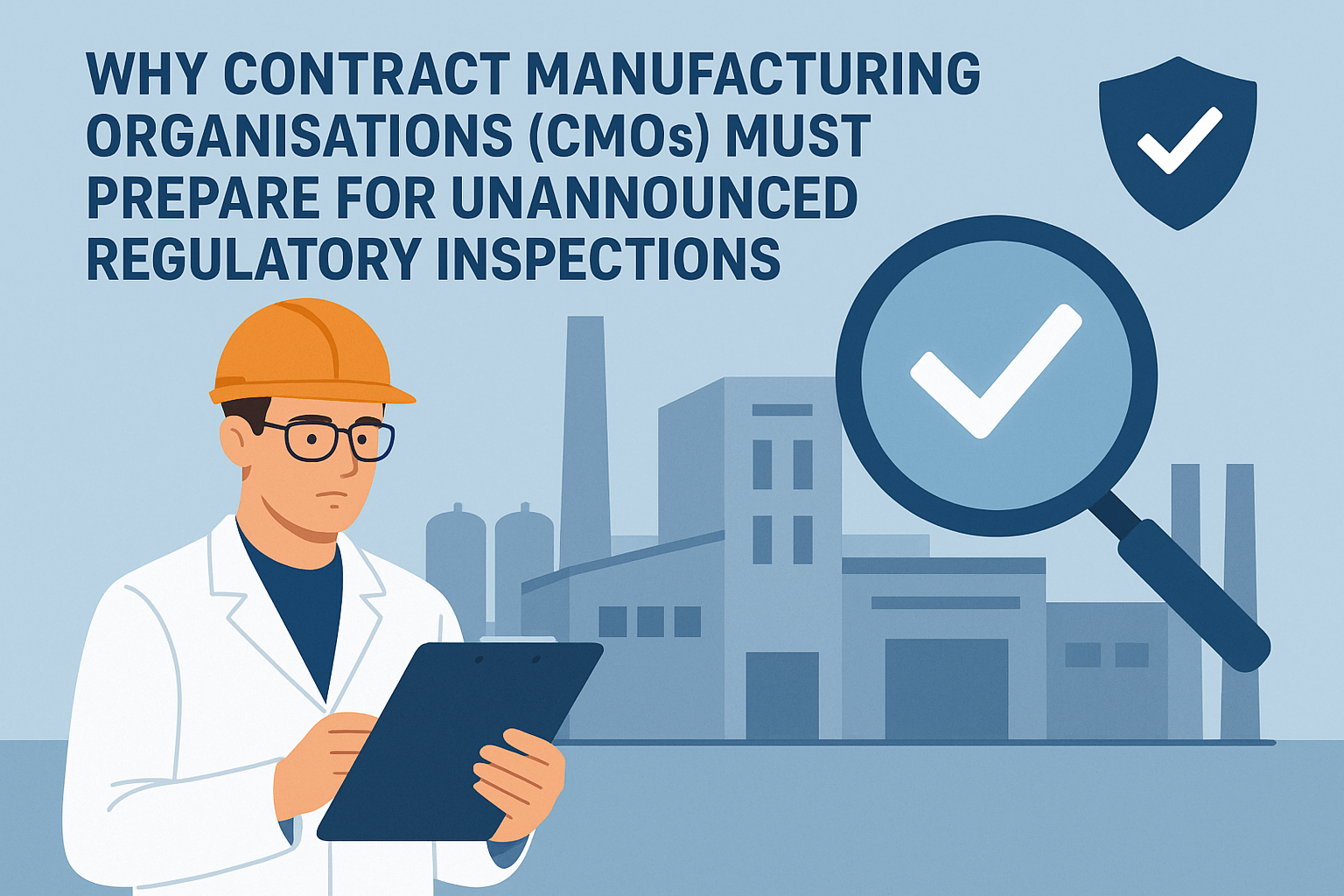
In the highly regulated pharmaceutical and biopharmaceutical environment, regulatory bodies such as the MHRA, FDA, EMA and WHO have increasingly adopted the practice of conducting unannounced inspections at Contract Manufacturing Organisations (CMOs). These audits are designed to ensure that Good Manufacturing Practice (GMP) requirements are met consistently, without the opportunity for pre-audit preparation that could conceal ongoing non-compliance.
For CMOs, this shift means that audit readiness must be a continuous state, not an occasional project. A single critical finding during such inspections can lead to product recalls, import bans, loss of contracts, and reputational damage.
Why Unannounced Inspections Are Becoming More Common?
Regulators are turning to unannounced inspections for several reasons:
- Ensuring True GMP Compliance – To verify that high-quality standards are maintained at all times, not just during scheduled visits.
- Data Integrity Concerns – To assess whether data is recorded in real time and is free from manipulation.
- Global Supply Chain Complexity – With multiple outsourcing partners involved in production, regulators aim to ensure each link in the chain complies fully with regulations.
- Past Non-Compliance Trends – Facilities with a history of observations or warning letters are often prioritised for surprise inspections.
Key Risks CMOs Face in Unannounced Inspections
Common gaps identified during such inspections include:
- Inadequate documentation practices leading to data integrity concerns.
- Equipment maintenance lapses resulting in contamination or quality issues.
- Untrained or under-trained personnel unable to demonstrate procedures accurately.
- Poor supplier qualification processes causing quality failures in raw materials.
- Incomplete or outdated Standard Operating Procedures (SOPs).
Strategies for CMOs to Stay Inspection-Ready
Remaining prepared for an unannounced audit requires a culture of continuous compliance. This can be achieved by:
- Embedding GMP in Daily Operations
Make GMP compliance part of the organisation’s DNA. Every task, from material receipt to final product release, should follow documented and validated procedures. - Maintaining Real-Time Documentation
Records should be accurate, legible, contemporaneous and readily retrievable at all times. Data integrity principles (ALCOA+) must be applied consistently. - Conducting Regular Internal Audits
These should mirror regulatory inspections and cover all departments, from production and quality control to warehouse and engineering. - Ongoing Personnel Training
Staff should be competent not only in their daily tasks but also in answering auditor questions and demonstrating procedures correctly. - Ensuring Supplier and Subcontractor Compliance
Regularly qualify and monitor suppliers, as deficiencies in their processes can directly impact your compliance status. - Simulating Surprised Audits
Periodic mock inspections, carried out without prior notice, help identify weaknesses and train staff to respond effectively under real audit conditions.
How Q&V Supports CMOs in Audit Readiness
At Q&V, we understand the operational pressures CMOs face while meeting stringent GMP expectations. Our Audit Readiness Programmes are designed to:
- Conduct comprehensive gap analyses to identify areas of risk before regulators do.
- Provide realistic mock inspections that replicate the depth and style of regulatory inspections.
- Offer practical remediation plans to address findings promptly and sustainably.
- Train personnel to communicate confidently and accurately during inspections.
- Establish robust documentation and quality systems that stand up to scrutiny at any time.
With Q&V as a trusted partner, CMOs can operate with confidence, knowing they are inspection-ready every day – whether a regulator gives notice or not.